 |
Teappcm, is the pioneer manufacturer supplier of Phase Change Materials for Air condition and heating, Electronic cooling etc and various Related Chemicals in India USA etc. It has several associated manufacturing facilities spread across the globe. No other vendor in the world knows the subject better than us. The participating units have one or more of the certifications like ISO-9001, ISO-22000, Halal & Kosher Cettification. We also have "REACH" Preregistration. |
| Bookmark this Website Site | Email This Website Info to a Colleague or Yourself |





General Products -- Phase Change Material Air Condition, Green House & Electronic Cooling --
A.C. Backup Phase Change Material -- Encapsulation Method of PCM -- Telecom Shelters Electronic Cooling Phase Change Material -- FAQ
PCM Phase Change Material Manufacturers for BTS Basic Telecom Shelter or Electronic Cooling
Phase Change Materials (PCMs) are "latent" thermal storage materials. They use chemical bonds to store and release heat. The thermal energy transfer occurs when a material changes from a solid to a liquid, or from a liquid to a solid form. This is called a change in state or "phase." Initially, these solid-liquid PCMs perform like conventional storage materials; their temperature rises as they absorb heat. Unlike conventional heat storage materials, when PCMs reach the temperature at which they change phase (their melting point), they absorb large amounts of heat without getting hotter. When the ambient temperature in the space around the material drops, the PCM solidifies, releasing its stored latent heat. PCMs absorb and emit heat while maintaining a nearly constant temperature. Within the human comfort and electronic-equipment tolerance range of 20°C to 36°C, latent thermal storage materials are very effective. The main applications for PCMs are when space restrictions limit larger thermal storage units in direct gain or sunspace passive solar systems. PCM may be used in Thermal Enclosures like Telecom Shelter Chambers BTS or BT Shelters or solar domestic hot water heating or passive solar space heating/cooling systems or in air-conditioning & refrigeration or cool-clothing.
Glauber's salt, Soda Ash, Sodium Acetate and paraffin wax are the most commonly used PCMs in solar heating systems. Although these compounds are fairly inexpensive, the packaging and processing necessary to get acceptable performance from them is complicated and costly. They are not offering a reliable pattern of releasing heat as the chemicals in these PCMs separate and stratify when in their liquid state. These PCMs have not always re-solidified properly. When temperatures dropped, they did not completely solidify, reducing their capacity to store latent heat. These problems have been addressed by packaging phase change materials in thin or shallow containers, and by adding clumping agents. Many salt hydrate PCMs have the disadvantage that during extraction of stored heat the material super-cools before freezing. This reduces the utility of the materials and if too severe, it can completely prevent heat recovery. They lose their heat storage property after some cycles. These types of Phase Change Materials, however, compare unfavorably with the newer generation of low-cost, highly efficient PCMs. Researchers now label these older compounds as "limited utility" Phase Change Materials PCMs. Phase Change Material perform best in containers that—when combined with the PCM—total one inch (25.4 millimeters). However, our T-Series Latest™ PCMs have defied this restriction. The packaging material should conduct heat well; and it should be durable enough to withstand frequent changes in the storage material's volume as phase changes occur. It should also restrict the passage of water through the walls, so the materials will not dry out. Packaging must also resist leakage and corrosion. Aluminum, steel and polyethylene are common packaging materials.
Latest 29T: PCM LatestTMBrand with Melting Point 29°C and Latent Heat of fusion 175 K.Joule/Kg or 260 K.Joule/liter. It is best suited for Air-Condition Back-up to BT Shelter or Telecom Shelter.
Latest 36S: PCM LatestTM Brand with Melting Point 36°C and Latent Heat of fusion >230KJ/Kg (260 K.Joule/Kg or 357 K.Joule/liter). It is best suited for Air-Cooled Out Door BTS or Telecom Shelter.
Telecom Enclosure: PCM or Phase Change Material widely used in Telecom Enclosures (BTS or Basic Telecom Shelters) is LatestTM 29T for Air-condition Back Up AC and 36S for Free Cooling. We also Offer Polymer-based PCM-Filled Profiles or Panel and Battery Jacket, Balls, Pipes, Heat Sinks, Bottles and Aluminum/SS/MS PCM-Filled Profiles etc.. We also provide engineering services and offer complete unit, with Air Circulators and Controls for Back-up Cooling in Existing Shelter (Retrofit) and in New Shelters.
Back-up Air-conditioning with Latest™29T PCM
Power Failure is very common in developing countries. Most BTS or Basic Telecom Shelters or Telecom Enclosures are equipped with electronic Equipments and Battery for emitting proper signal to the cell-phone users. Ac or Air conditioning is providec to keep it cool. When the power fails, the temperature inside the BTS or Basic Telecom Shelters start rising very rapidly due to heat generated by the equipments and also due to ambient conditions. Diesel Generators are provided to give back up. However they are largely depended on the alertness of the watchman cum operator at the site. The contractors often delay in sending diesel aggravating the problem. To minimize the dependence on generators, Back-up air-conditioning may be provided by phase change material. Latest™ 29T is used in India for giving back-up to Air-Conditions. 240kg of Latest™29T is generally used per BTS. 240kg*180 J/kg 43200 K Joules of backup. This is equal to 43200/3600 = 12 KWH of energy (Theoretical Value is 188KJ/Kg of PCM giving back-up of 12.5 KWH).
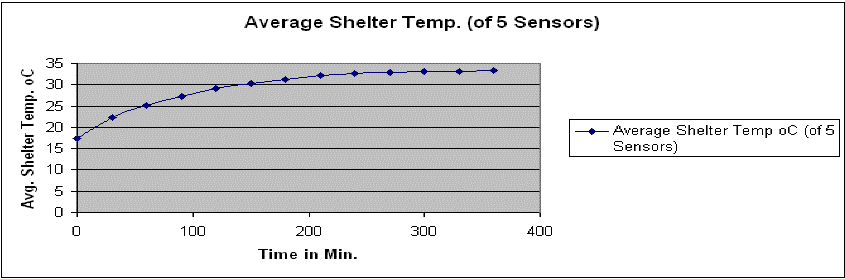
Live-Site Trial in a Telecom Shelter after Retro-fitting it with 210 Kg of PCM Latest™29T (10 KWH back-up)
Important Record.
Minutes after Power Shutdown - 0min - 030m - 060m - 120m - 180m - 210m - 270m - 300m - 330m - 360m
Average Temp°C (of 5 Sensors)- 17.3 - 22.4 - 25.2 - 29.1 - 31.3 - 32.1 - 32.8 - 33.1 - 33.2 - 33.3
Other Relevant Record
Outside Temp°C --------------- 26.5 - 28.0 - 29.5 - 31.0 - 33.0 - 33.0 - 30.0 - 28.5 - 28.0 - 26.7
Battery Voltage -------------- 25.18- 24.99- 24.98- 24.65- 24.45- 24.21- 23.89- 23.61- 23.45- 22.94
Shelter Temp Centre Top °C --- 17.5 - 23.1 - 25.8 - 29.5 - 31.0 - 31.7 - 33.5 - 33.5 - 34.0 - 34.1
Permissible limit of Trial was up to Shelter Temperature of 35°C. The Trial was discontinued as the Battery Voltage went low.
The PCM could have lasted for 1-2 Hours more, if the Battery Voltage had not dropped.
 Please Click to Enlarge
| Power available 18 Hours/day. 6 hours load shedding. | |
| Expense on | SHELTER WITHOUT PCM -- SHELTER WITH PCM |
| Power Cost | Rs.04,10,625 --------- Rs.05,47,500 |
| DG Cost | Rs.09,58,125 --------- Rs.######### |
| Total Cost | Rs.13,68,750 --------- Rs.05,47,500 |
| Savings over 5 years | Rs.######### --------- Rs.08,21,250 |
| % Savings in fuel cost. | Rs.######### --------- 60% |
| Only 25-35% of the above savings will be the cost of retrofitting PCM in an existing shelter. | |
| Considerations: | |
| 1. Power Cost = Hours of power availability (hrs) X Load (KW) X Cost of Power (Rs. 5/KW-hr) X 365 (Days/year) X 5 years | |
| 2. DG Cost = Hours of operation (hrs) X Diesel Cost ( 35 Rs/ltr) X Diesel Consumption (2.5 ltr/hr) X 365 (Days/year) X 5 years | |
| 3. Power Cost with PCM is higher as PCM uses energy from AC to charge. | |
| PCM charging cost = Load (KW) X Hours of back-up (hrs) X Days per year X Years X Cost of Power (Rs.5/unit) | |
| 4. Intangibles like cost of maintenance of DG set, COP of a/c, "green factor" of no emissions are not taken into consideration. | |
| 5. Benefits like 80 % book-depreciation in the first year on capital investments of "Energy Management Systems" is added advantage. | |
| Our company can undertake retro fitment of PCM's on a turnkey basis. | |
TECHNO-COMMERCIAL STATEMENT OF PCM PRODUCT T-series Latest™
| PCM Energy P. Ltd | PCM Latest™ |
| Product | Latest™29T also any other grade like Latest™18T, Latest™20T, Latest™22T, Latest™25T |
| Series | T-series Latest™ |
| Description | Viscous Semi-Solid near Phase Change Temperature |
| Appearance | Translucent |
| Base Material | Inorganic Salts |
| Phase Change Temperature | 28-30°C |
| Sub Cooling | 2°C max |
| Specific Gravity | 1.48-1.50 |
| Latent Heat Practically | 175 Joules/g |
| Latent Heat Theoretical | 188 Joules/g |
| Spec. Heat | 2 Joules/g°C |
| Thermal Conductivity | 1Watt/m °C |
| Congruent Melting | Yes |
| Flammability | No |
| Hazardous | No |
| Thermal Stability | > 10000 cycles |
| Max. Operating Temperature | 100°C |
| Rates | Available on request |
T-series is the Latest in PCM technology, Generation-X. It is not degradable with time. It can be used in thicker layers greater than 1” (>25mm). This product has made the earlier PCMs obsolete.
Latest™ 25T, Latest™ 20T, Latest™ 18T salts are similar to Latest™ 29T
Phase Change Materials perform best in containers that have a depth of one inch (25.4 millimeters). However, our T-Series Latest™ PCMs have defied this restriction. T-series is the Latest in PCM technology, Generation-X. It is not degradable with time. It can be used in thicker layers greater than 1” (> 25mm). This product has made the earlier PCMs obsolete.
Table of Cycle No. V/s Latent Heat & Sub Cooling for PCM Latest™29T| Cycle No. | Latent Heat KJ/Kg & Sub-cooling in C |
| 100 | LH 196 KJ/Kg & Sub-cool 0.5C |
| 200 | LH 188 KJ/Kg & Sub-cool 1C |
| 300 | LH 188 KJ/Kg & Sub-cool 0.9C |
| 400 | LH 192 KJ/Kg & Subcool 0.8C |
| 500 | LH 185 KJ/Kg & Sub-cool 0.7C |
| 1000 | LH 178 KJ/Kg & Sub-cool 1C |
| 1500 | LH 172 KJ/Kg & Sub-cool 1.3C |
| 2000 | LH 175 KJ/Kg & Sub-cool 1.2C |
| 2500 | LH 178 KJ/Kg & Sub-cool 1.3C |
| 3000 | LH 170 KJ/Kg & Subcool 1.4C |
The Error in measurement of Latent Heat can be upto 5% and The Thermometer Sensor can be off by 0.5°C
Thermal Energy Storage Salt Latest™29T
Our Renewable Energy Thermal Salt Latest™29T is a mixture of several ingredients. Most of these items are manufactured by us or by our sister concerns. Its properties are as under:
Specific Gravity: 1.5
Freezing Point: 28°C
Melting Point: 29°C
Latent Heat of Fusion: 175 KJoule/Kg (40 K. Cal/Kg). 255 KJ/ltr (60000 KCal/Cu.m)
*Most manufacturers report the heat of fusion in a temperature range, like 20°C to 35°C. The specific heat of PCM in this range will get added to the values. For this temperature range
*Latent Heat of Fusion: 210 KJoule/Kg (50 K. Cal/Kg)
Shelf Life: Infinite
Max. Operating Temp.: 100°C
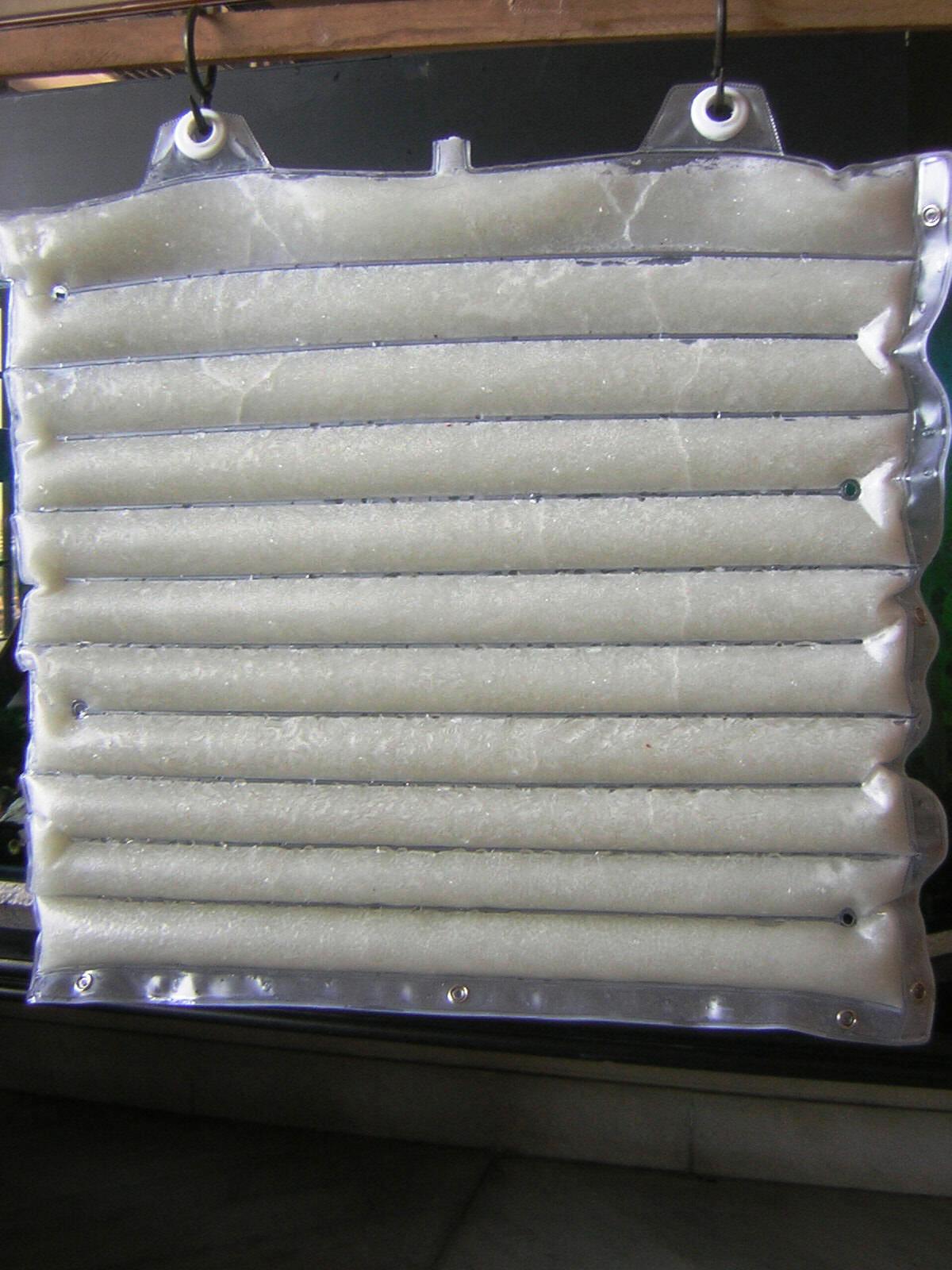
Thermal Salt filled Battery Jacket for Outdoor Telecom Shelter helps keep the battery at the desired temperature even when the internal temperature of the shelter varies widely. It thus enables establishment of two-climate zones in the shelter, enhancing the life of the battery.
 -----
----- 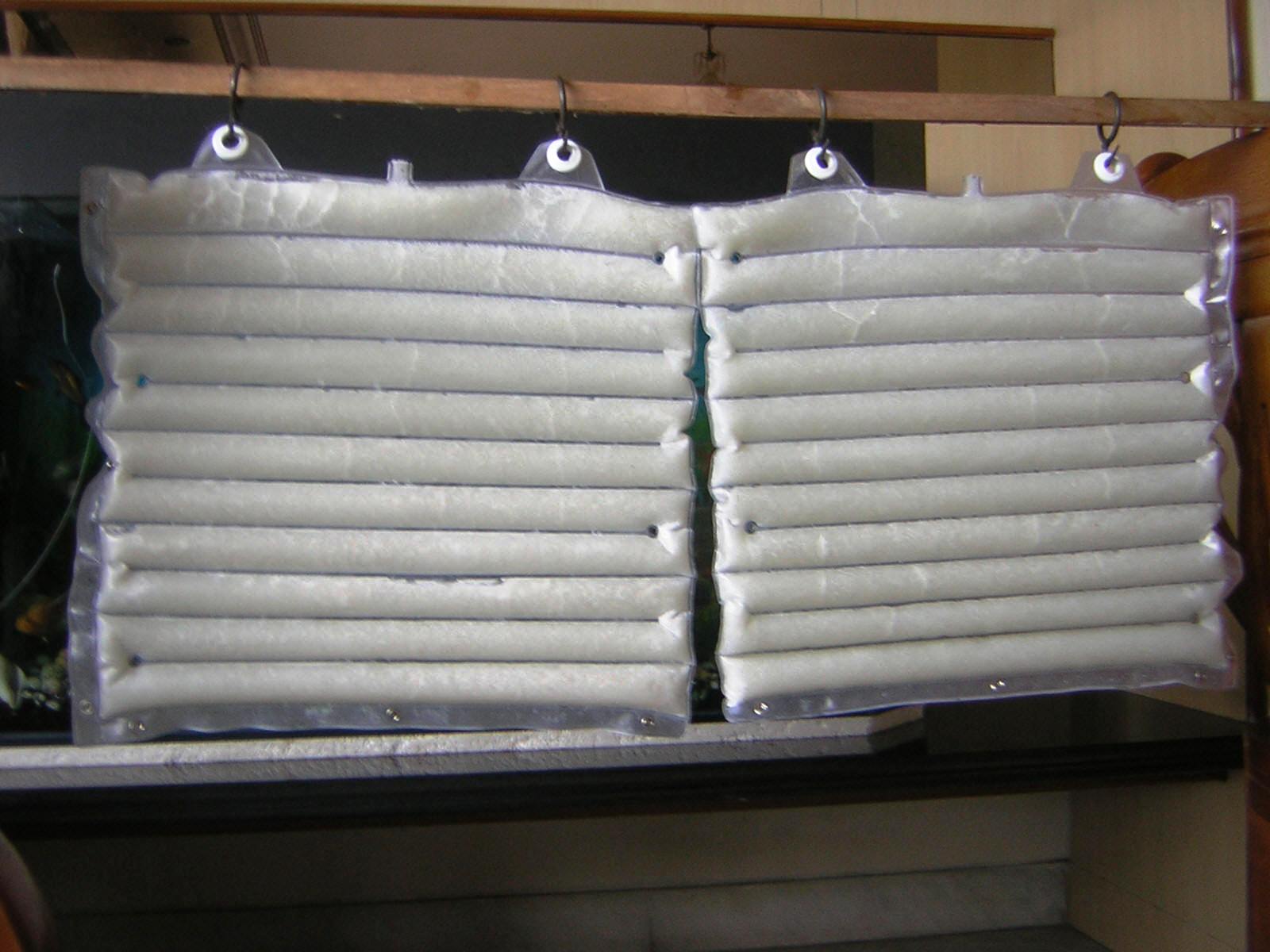
Battery Jacket for Outdoor Telecom Shelter
Eliminate Diesel Generator:
For Advanced Users: Most PCM users are at the elementary stage of using the PCMs. They are ordinarily not conditioned to talk of any deviations from the systems, they have heard of. Using PCM-29 itself is more than adequate mental kick for them. Some vendors manage to convince them that the use of PCMs will save energy charges for them. The primary purpose of the PCMs is to provide a back-up to Air Condition AC and avoid the use of Diesel Generator. The site managers and the watch-man cum operator of the site, may not be sufficiently professional. They often fail to keep the diesel at site and restore to "Keep the Door Open for Cooling" ways to cut corners. The relevance of PCMs is more, if the power failure is a norm in the area of usage. We have a Brain-Wave. Instead of giving 4-6 hours of Back-up, why not give 12-18 hours of Back-up and eliminate the Diesel Generator???!!! This will, of course needs higher battery capacity. In those places, where the whether and equipments permits, you can eliminate the Air Conditioner by using Day-Night temperature balancing with PCM.
No electricity & Generator:
In a remote area a site was running on diesel generator and there was no electricity in the region. On receiving an enquiry for installing PCM in the BT Shelter, we had the impulse of telling them that PCM will be of no use to them. One of their junior engineer was very bright and he discussed the details with our senior scientist. He summarized that their diesel generator is installed for working in the extreme conditions of weather and telecom traffic. the generator works on full load, irrespective of the traffic and weather. If PCM back-up is installed, then it will reduce their diesel cost by 50% and hence he ordered for installing the PCM back-up. To the good luck of the junior engineer his theory did work.
Free Cooling for BT Shelters (Telecom Shelter)
Weather Information| Ahmedabad | Mean Temperature°C |
| Month | Minimum -- Maximum |
| January | 11.7°C- -- 28.4°C |
| February | 13.8°C- -- 31.3°C |
| March | 18.8°C- -- 36°C |
| April | 23.4°C- -- 39.9 |
| May | 26.2°C- -- 41.8°C |
| June | 27.0°C- -- 38.4°C |
| July | 25.7°C- -- 33.3°C |
| August | 24.8°C- -- 31.9°C |
| September | 24.1°C- -- 33.4°C |
| October | 20.9°C- -- 35.8°C |
| November | 16.5°C- -- 33.2°C |
| December | 13.0°C- -- 29.8°C |
Presentation for Providing Free Cooling in BT Shelters in the “Hinter Land”
The above details are the mean maximum and minimum temperatures in various cities in the “Hinter Land”. The selected cities do not include any of the costal towns as the costal towns have a different temperature pattern. The above information is available from World Weather Information Service, India Meteorological Department.
A close scrutiny shows that the mean monthly maximum temperature in India, in the hinterland can be 43oC and a peak time maximum temperature in India, in the hinterland can be 45oC with an occasional shoot-up. The corresponding minimum temperature can be 27oC on that day. A PCM of 36oC is ideally suited for such a climate and for a BT Shelter that is targeting a maximum temperature of 40oC inside the shelter.
The worst day in the year may have a temperature profile in a day as under:| 40 to 45°C+ | for 4hours |
| 36 to 40°C | for 8 hours |
| 27 to 36°C | for 12 hours |
The temperature pattern in the BT Shelter can be as under:
| No. of Hours in a day | Ambient Temp.°C - Shelter Temp. w/o PCM - Shelter Temp. with 36°C PCM - Energy Load in KWH |
| 04 | 40-45+°C ###### - 50-55°C ############# - 38-40°C ################### - 5KWH Discharging |
| 08 | 36-40°C ####### - 46-50°C ############# - 36-38°C ################### - 5KWH Discharging |
| 12 | 27-36°C ####### - 37-46°C ############# - 27-36°C ################### - Charging PCM. |
The PCM of Melting Point 36°C is well suited for the job. Depending on the size of BTS and ambient conditions, the Energy load will vary.
The PCM of Melting Point 36°C is well suited for the job. Ideally we must have enough PCM to take care of uncertainties. For a big Shelter, we propose to have 100 kg of PCM of >200 Kilo Joules/kg which means 20000 KJ for the system. We can have profiles of PCM filled panels on a rack. This will store 20000 KJ for the system. 20000 KJ means 20000/3600 = 5.55 KWH. For a small Site 50Kg of material will be enough. This presentation is made for starting an interaction with user. The user may evaluate, amend and interact with us. Please check our write-up on LatestTM 36S. Depending upon the need one can select, Latest 25™S, Latest 30™S, Latest 45™S salts that are similar to Latest 36™S
TECHNO-COMMERCIAL STATEMENT OF PCM PRODUCT PHASE CHANGE MATERIAL S-series Latest™
| PCM Energy P. Ltd. | PCM Latest™ |
| Product | Latest™36S also other grades like Latest™32S, Latest™34S, Latest™48S |
| Series | S-series Latest™ |
| Description | Viscous Semi-Solid near Phase Change Temp. |
| Appearance | Cream or Gray |
| Base Material | Inorganic Salts |
| Sub Cooling @ 1000 cycles | Small |
| Specific Gravity | 1.45 |
| Latent Heat Theoretical | 260 Joules/g - |
| Latent Heat Practical | >200 Joules/g - >220 Joules/g - >230 Joules/g - >230 Joules/g |
| Spec. Heat | 2 Joules/g oC |
| Thermal Conductivity | 0.6Watt/m oC |
| Congruent Melting | Yes |
| Flammability | No |
| Hazardous | No |
| Thermal Stability | > 10000 cycles |
| Max. Operating Temp. | 100°C |
| Rates | Available on request |
Phase Change Materials perform best in containers that have a depth of one inch (25.4 millimeters). However, our S-Series Latest™ PCMs have defied this restriction. S-series is the Latest in PCM technology, Generation-X. It is not degradable with time. It can be used in thicker layers greater than 1” (> 25mm). This product has made the earlier Phase Change Materials PCMs obsolete.
Thermal Salt Latest™36S.
Our Renewable Energy Thermal Salt Latest™36S is a mixture of several ingredients. Most of these items are manufactured by us or by our sister concerns. Its properties are as under:
Specific Gravity: 1.4
Melting Point: 36°C.
Latent Heat of Fusion: 250 KJoule/Kg (60 K. Cal/Kg) or 340 KJoule/liter (81000 KCal/Cu.m)
*Most manufacturers report the heat of fusion in a temperature range, like 20°C to 40°C. The specific heat of PCM in this range will get added to the values. For this temperature range.
*Latent Heat of Fusion: 300 KJoule/Kg (72 K. Cal/Kg).
Thermal Expansion: The coefficient of thermal expansion is the least offered in the industry. This eliminates cracking or shattering of containers and tubes.
Max. Operating Temp.: 100°C
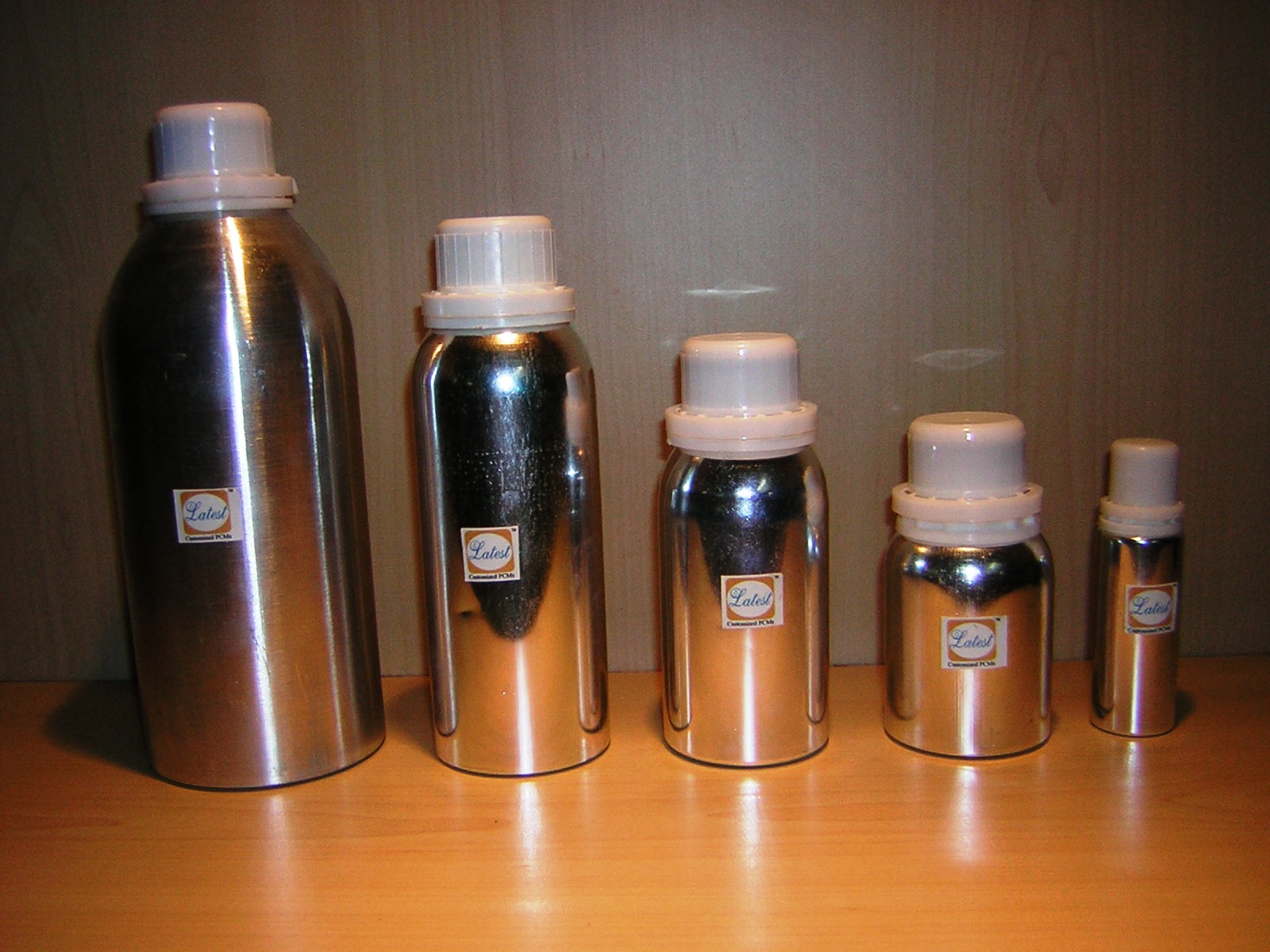

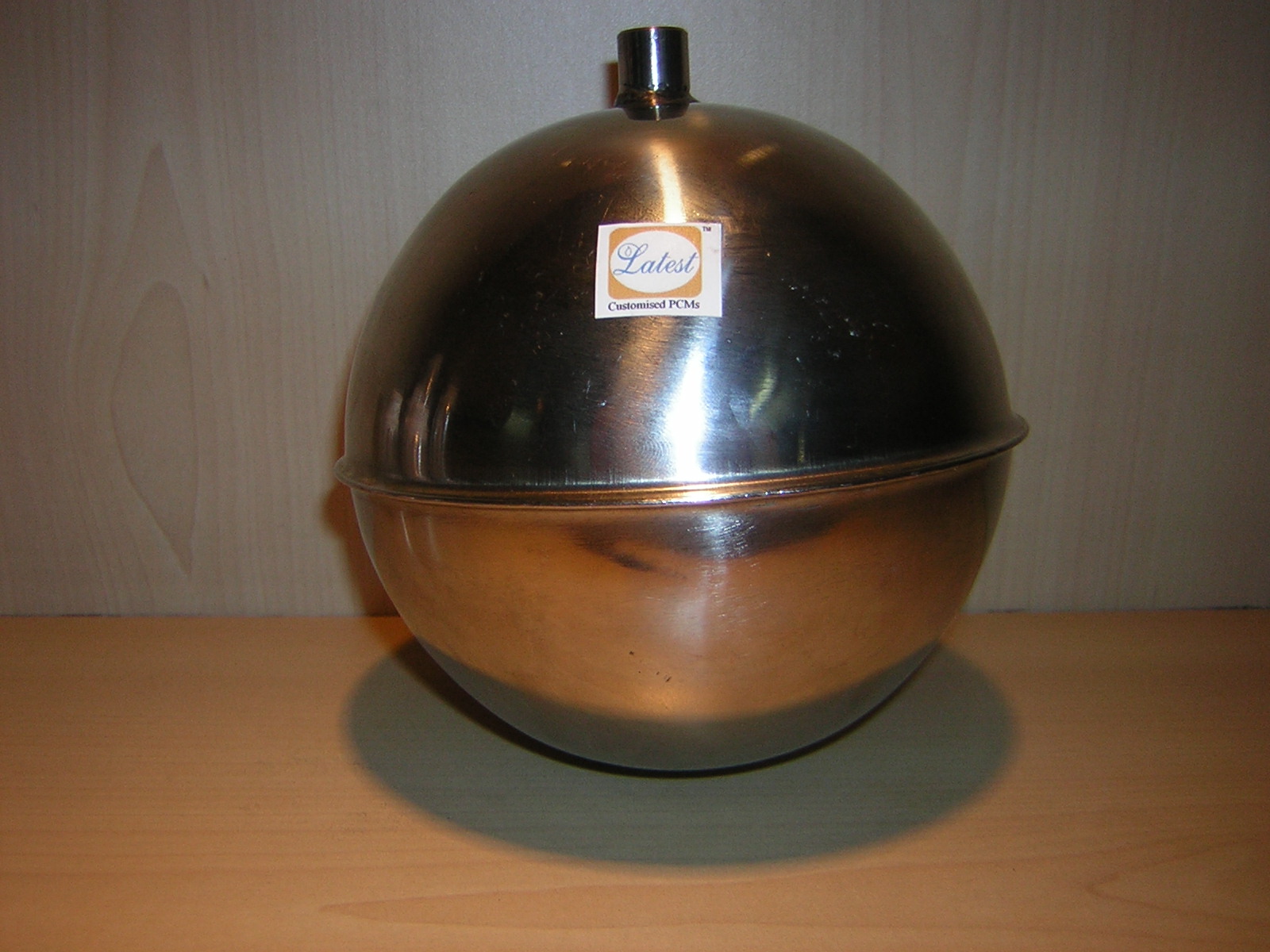
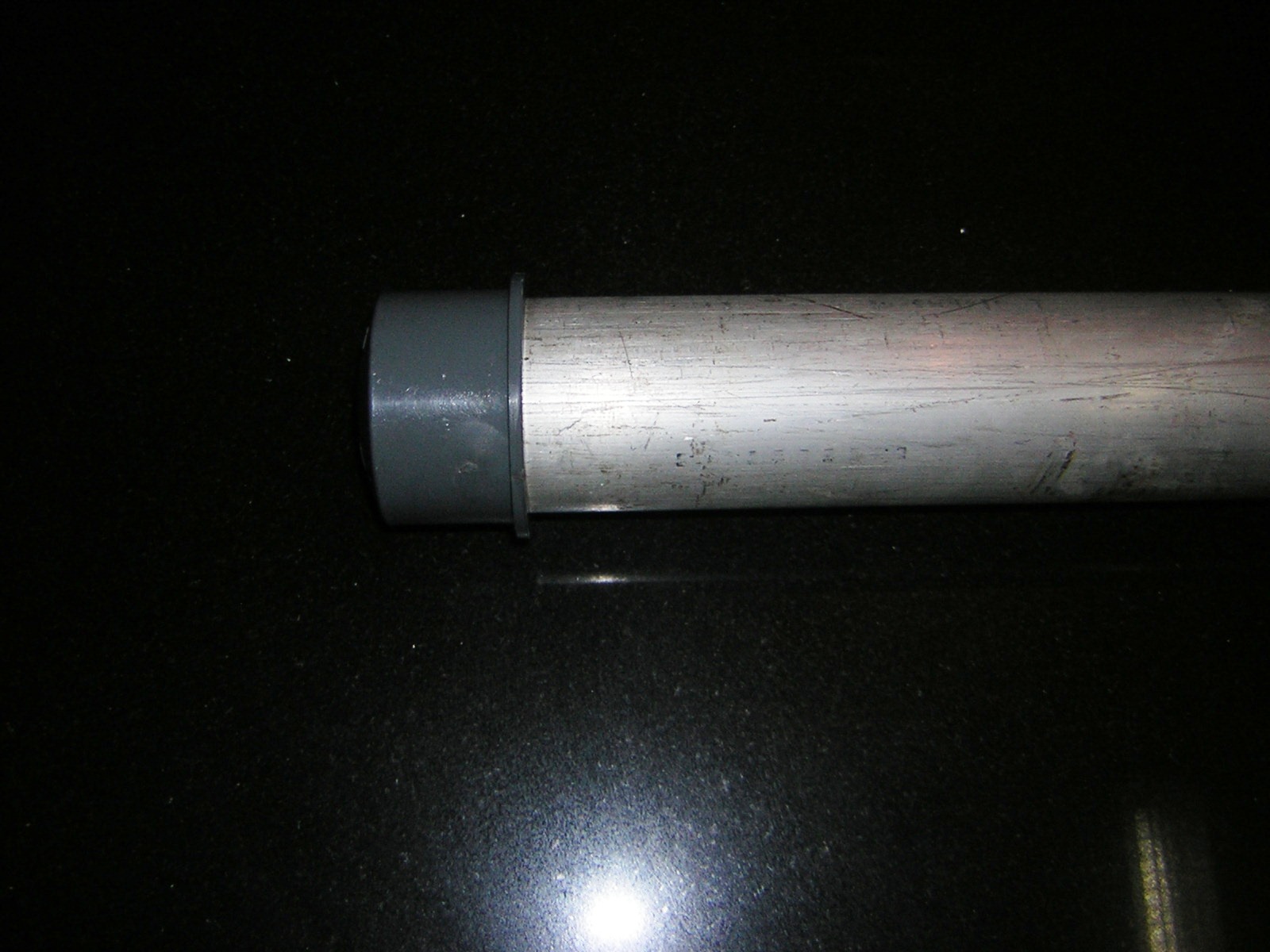
------------------------ PCM filled Panels -------------------------------------- PCM filled SS Ball ---------- Jacket ------------------ Aluminum Pipe --

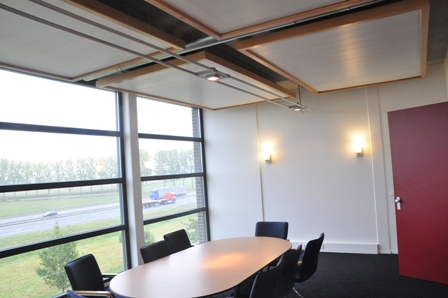
Natural Air-conditioning with PCM in Roof
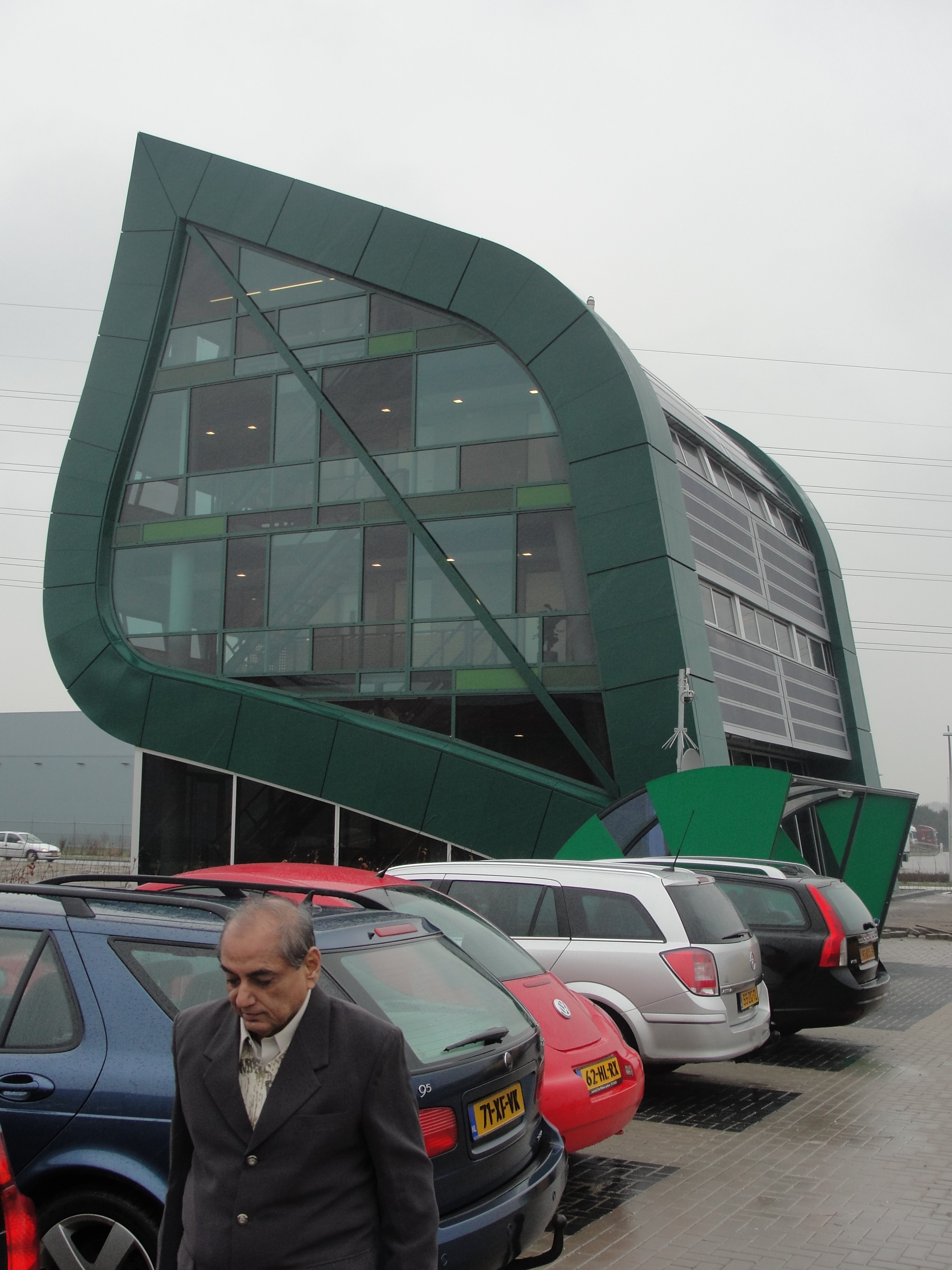
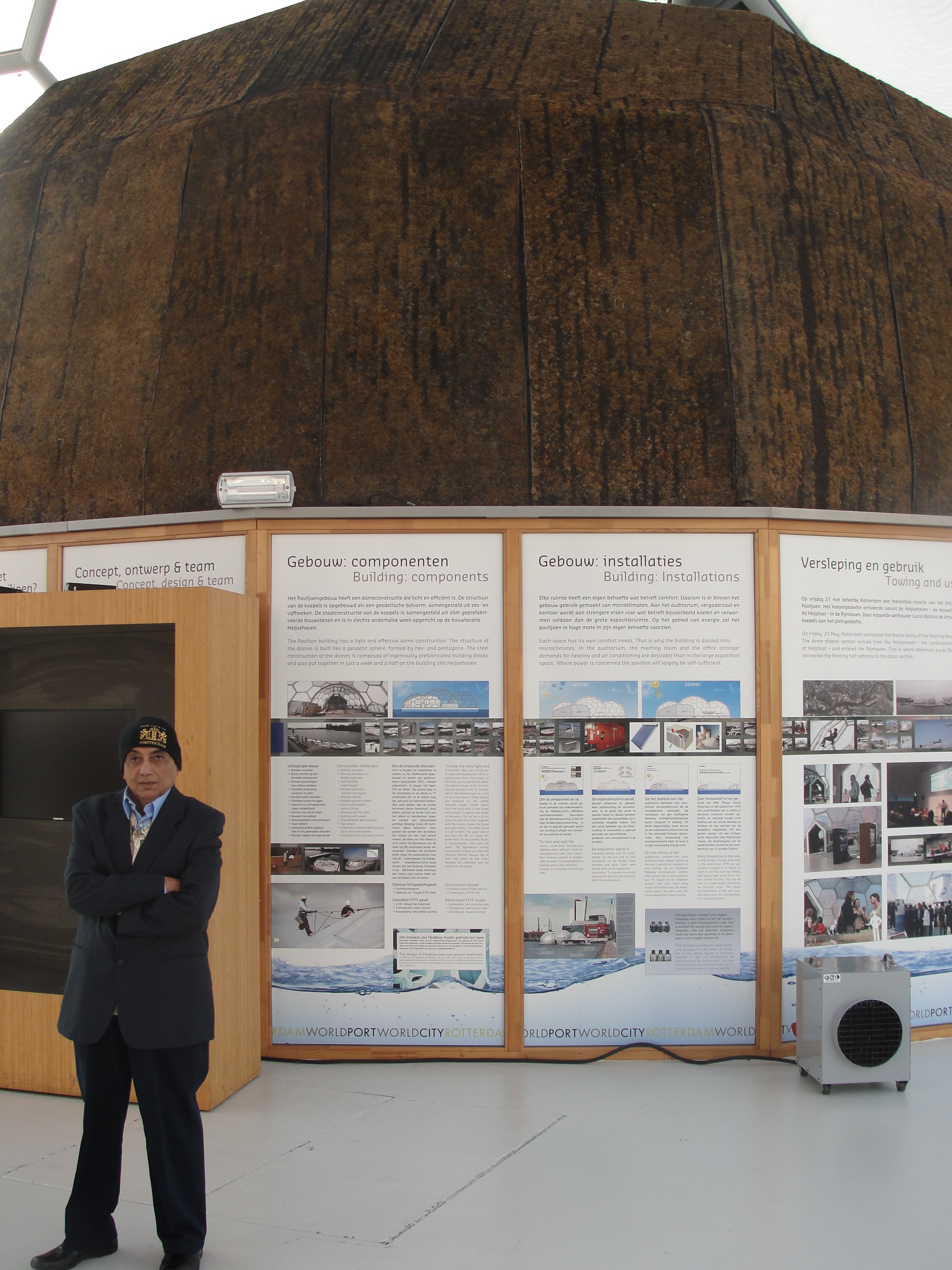
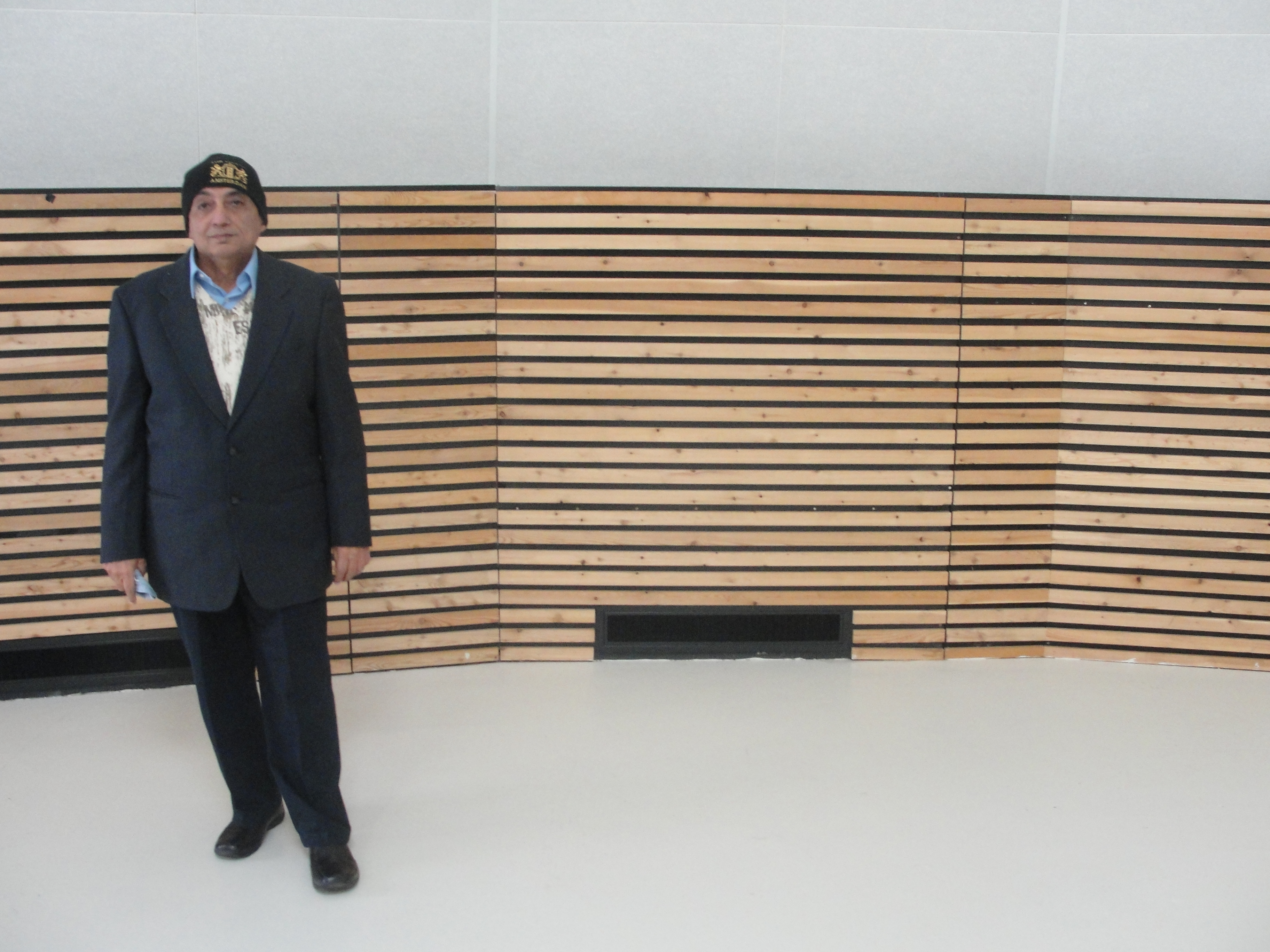

PCM Phase Change Material Cooled AC Air Conditioning done in Netherlands

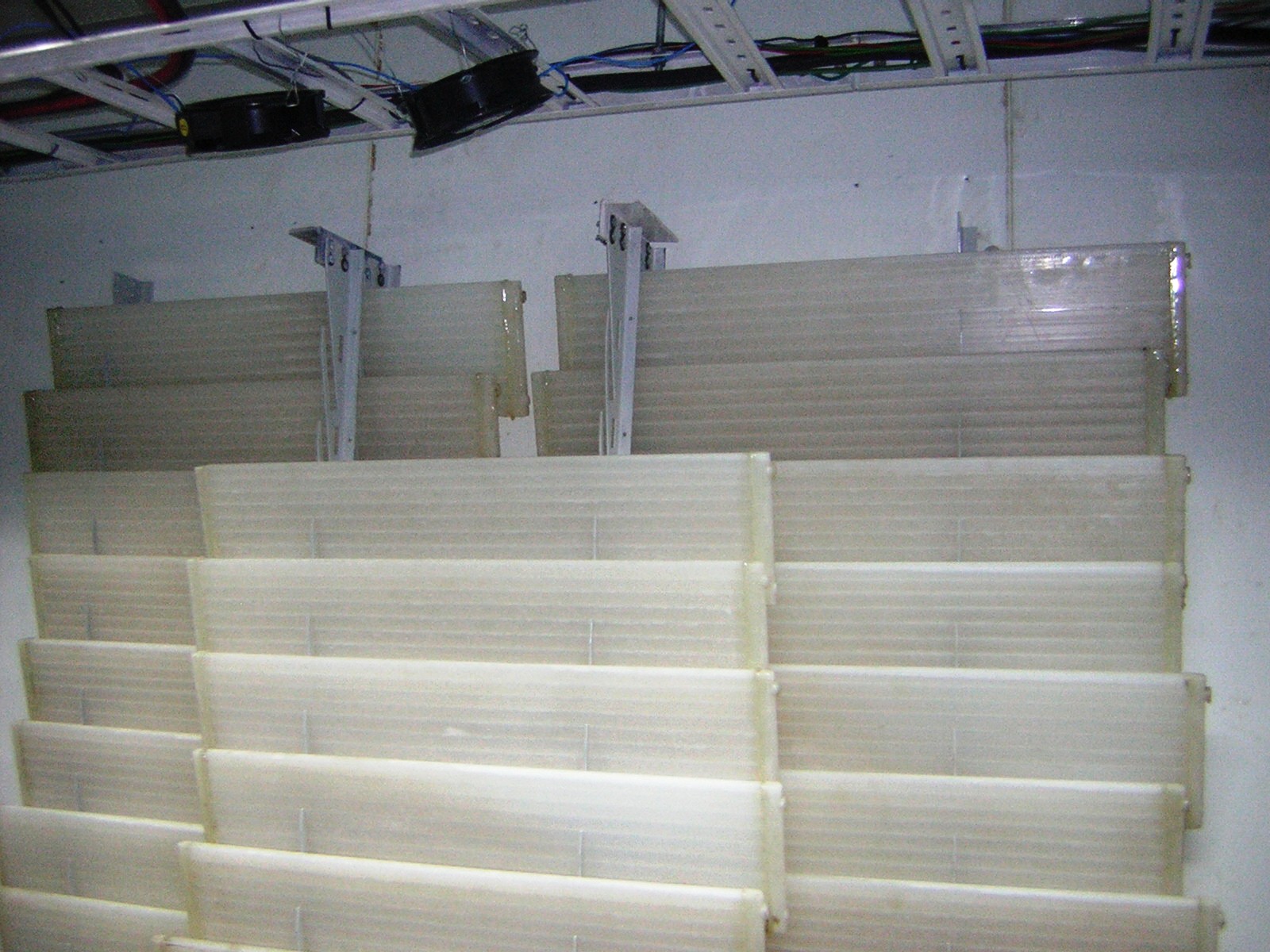
Electronic Cooling
Neatly Packed PCM Profiles in BTS Telecom Shelter
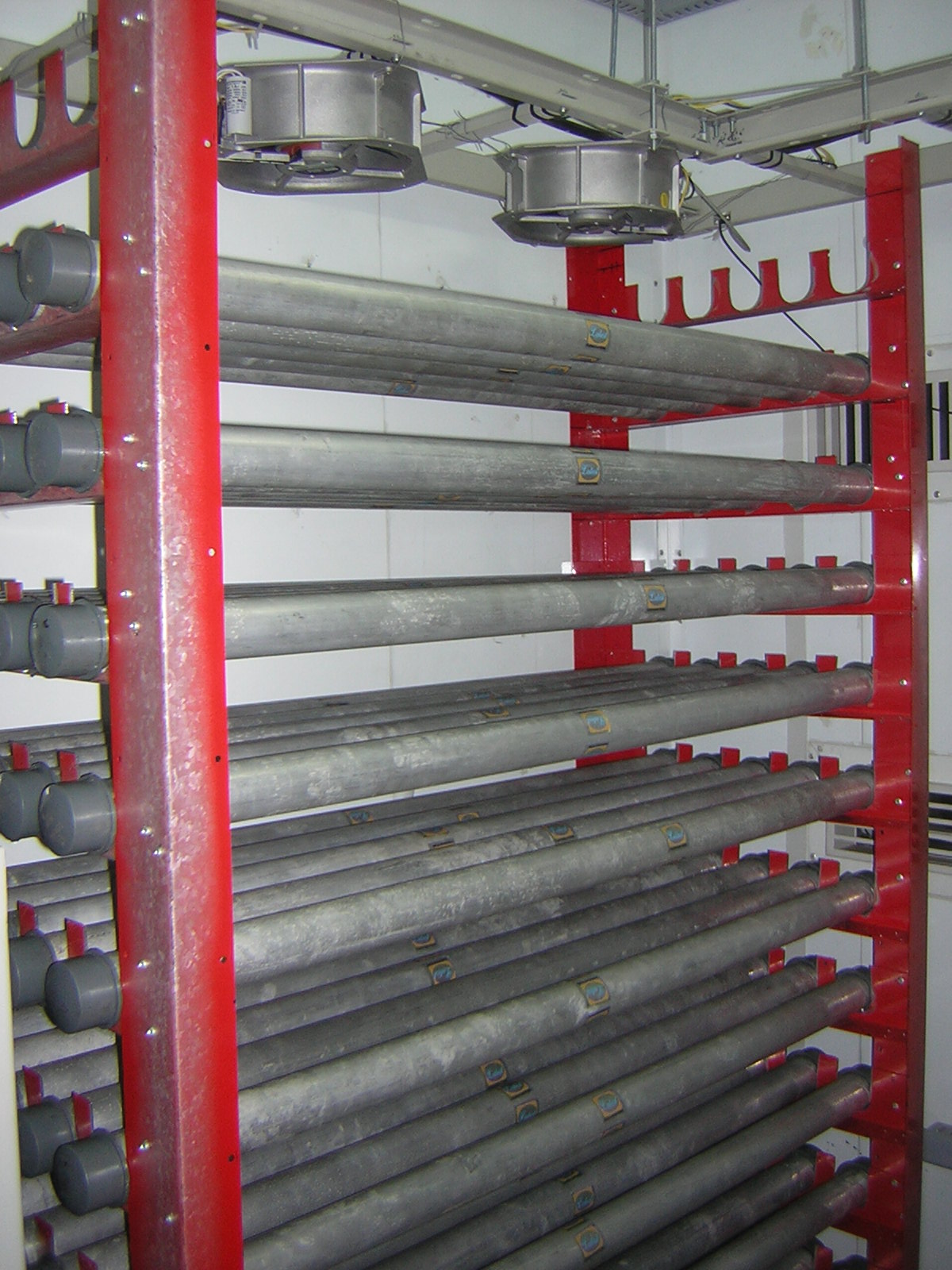
AC Back-up for Telecom Shelter in Aluminum Pipes
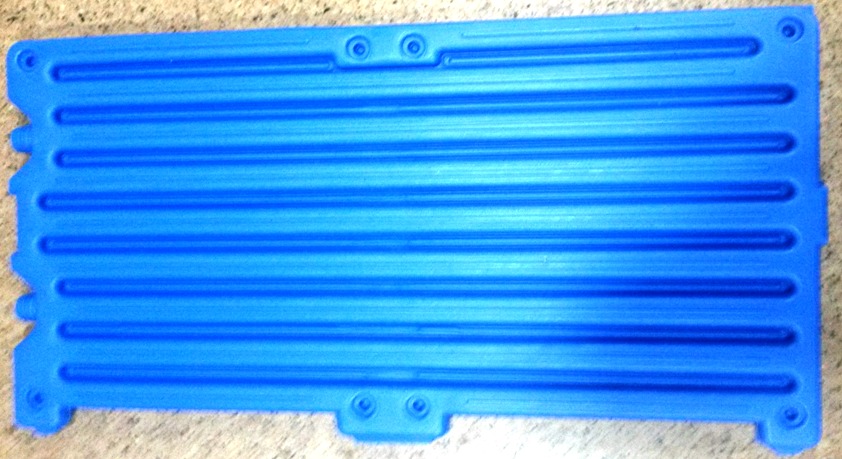
Stackable HDPE Heat Exchange Panels.
PCM Manufacturers
Phase Change Material Manufacturers
Teappcm
Telephone: 91-22-65290113.
anmol(at the rate i.e. @)pcmenergy.com
Copyright and Usual Disclaimer is Applicable.
Last updated: 23 April, 2026
We are exporters to USA, Canada, UAE, Europe, South Africa, Tanzania, Kenya, Nigeria, Egypt, Uganda, Turkey, Mexico, Brazil, Chile, Argentina, Dubai, Sweden, Finland, Norway, Netherlands, Denmark Greenland, Norway, UK, Ireland, Germany, Belgium, Switzerland, Czech Rep., Slovakia, Scotland, Poland, Belarus, Germany, Austria, France, Ukraine, Australia, Spain, Italy, Vietnam, Thailand, etc.
Barter
They who love thee on this earth, keep calling on thee and chanting thy beads
Lest thou forgetest.
They assign the credit of their hard work to your blessings
They keep you amused.
They come to thy temple with baskets of fruits, as if you were a glutton
They deny the same to their children.
They offer you milk for a bath and burn the ghee
They hardly understand the meaning of it.
They bring gold and diamonds. They come with beating of drums
They love to advertise their offerings.
They offer you a small bribe as advance for booty, called lottery
They love to dream.
I do not bow down at your door
I do not bargain for booty
Your promise of the heaven does not lure me
Your hell-fire does not scare me
I do not even know the proper method of prayer
I do not offer any thing to you
Ages have gone by and I have not seen you my lord
Yet my love for you keeps waiting for you